What a Childhood Counting Game Taught Me About Learning Math
How a simple childhood game helped me rethink multiplication practice.
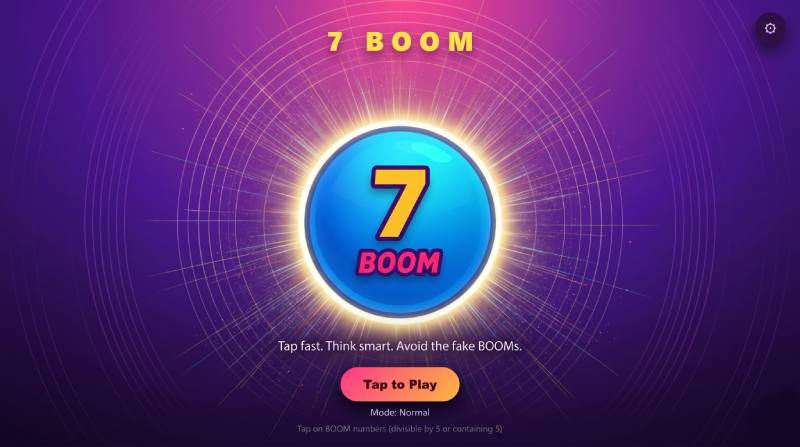
I'm an educator, but I'm also a dreamer.
I often find ideas in unexpected places. One day, while thinking about how children learn multiplication, I remembered a simple game from my childhood: 7 Boom.
Learning multiplication tables can be frustrating. It often relies on repetition and memorization, and not every child responds well to that approach.
Fortunately, many teachers and parents now understand that learning can happen through play. In fact, children often learn best when they don't even realize they're learning.
That's what made me think about 7 Boom.
The Hidden Math Behind 7 Boom
The rules are simple.
Players count upward from 1. Whenever they reach a number that is a multiple of 7, or contains the digit 7, they say "Boom!" instead of the number.
7. Boom.
14. Boom.
17. Boom.
27. Boom.
70. Boom.
At first glance, it seems like a simple party game. But underneath, players are constantly recognizing patterns, identifying multiples, and developing number sense.
Without realizing it, they're practicing math.
Educational Benefits of 7 Boom
While 7 Boom is simple, it helps players develop several important skills. Recognizing multiples, identifying patterns and reacting quickly all require active mental processing.
Over time, repeated exposure to multiplication patterns can help strengthen number recognition and mental math abilities.
Turning It Into a Digital Game
That observation inspired me to build a digital version called 7 Boom.
Instead of saying "Boom," players tap the screen whenever a valid number appears. If they react correctly, the game continues. If they miss one, or tap when they shouldn't, the game ends immediately.
The instant feedback changes everything.
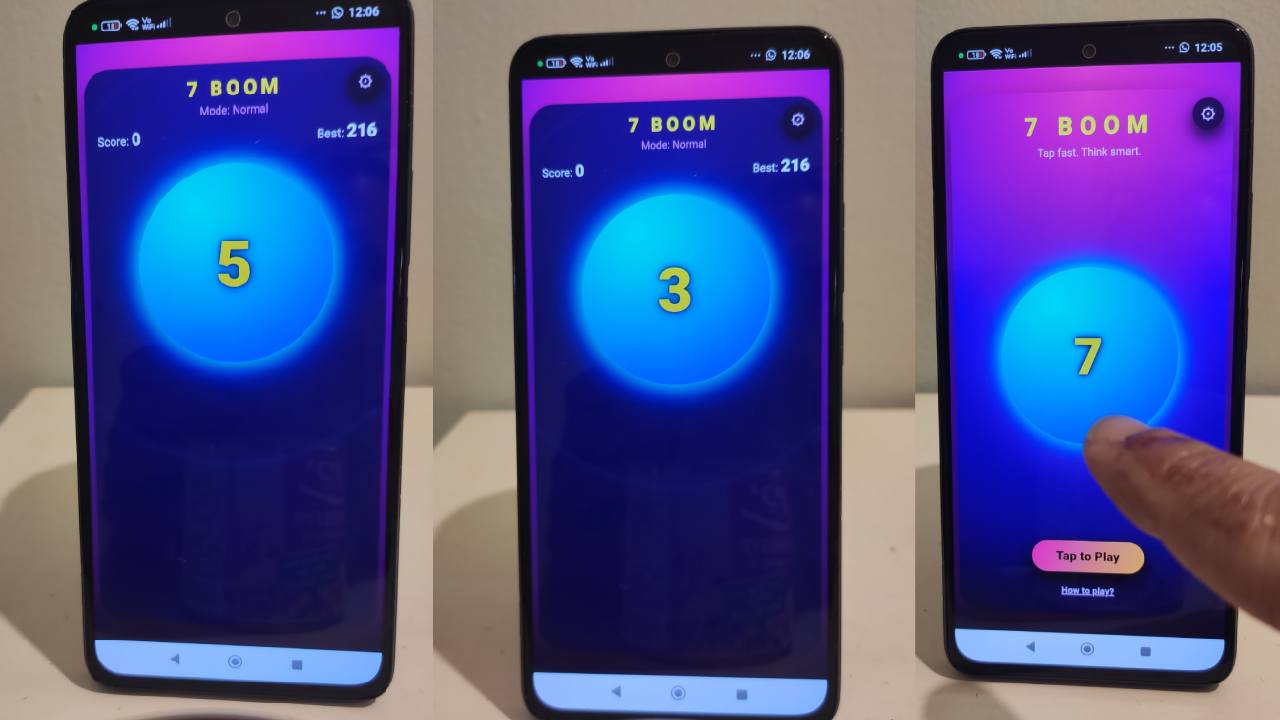
Players don't practice because they have to. They practice because they want to improve. They want a higher score. They want one more attempt.
What starts as a game becomes repetition. What becomes repetition eventually becomes learning.
Why Stop at 7?
Once the idea worked, another question appeared:
Why stop at 7?
The same concept can be used with multiples of 3, 5, 9, or other numbers. Each variation trains the brain to recognize different mathematical patterns.
And that's what fascinated me most.
The math wasn't hidden, but it wasn't forced either.
It was simply part of the challenge.
A Simple Lesson
This game won't replace teachers or textbooks.
But if a game can motivate a child to practice multiplication for ten extra minutes, that's already a win.
Sometimes the best learning tools aren't the most advanced ones.
Sometimes they're the ones that make us forget we're learning at all.
Try 7 Boom
Practice multiples, reaction speed and number patterns through a simple fast-paced challenge.
Play 7 Boom