How Speed Tapping Games Help Develop Hand-Eye Coordination in Children
How speed tapping games can support hand-eye coordination, focus, reaction speed and learning through play.
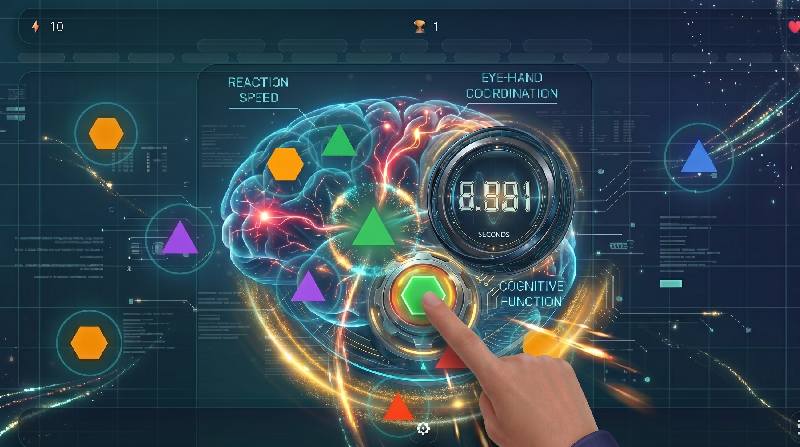
Two children stand facing each other. One throws a small ball, and the other tries to catch it. If the catch is successful, they both take a step forward, making the next throw a little faster and a little harder.
To them, it's just a game.
What they don't realize is that they're training concentration, reaction speed, visual processing, and hand-eye coordination all at once.
As both an educator and a game developer, I've often wondered whether digital games can recreate some of the developmental benefits of the physical games many of us grew up with. Looking back, many childhood games were quietly teaching us important skills long before we understood their value.
Today, much of children's play has moved from the playground to the screen. That shift often raises concerns among parents and educators. But perhaps the more important question isn't whether children use screens — it's what they do with them.
Why Speed Tapping Games Help Develop Hand-Eye Coordination
When children play reaction games such as a speed tapping game, their eyes detect information, the brain processes it, and their hands respond in a fraction of a second.
This strengthens one of the most important foundations of development: hand-eye coordination. The same skill supports writing, drawing, sports, music, and many everyday activities that require precision and control.
Focus in a Distracted World
A well-designed focus game challenges children to identify colors, patterns, and changing visual cues while ignoring distractions.
This ability helps children stay engaged, filter out irrelevant information, and maintain attention. These are the same skills that support reading, following instructions, and learning in the classroom.
From Play to the Classroom
Fine motor skills and visual-motor coordination are closely linked to early academic success.
Research has consistently shown connections between fine motor development, hand-eye coordination, and children's performance in early learning environments. Children rely on these abilities when learning to write, track lines of text, and complete tasks that require sustained attention.
Physical, visual, and cognitive development often grow together rather than separately.
Training the Brain Through Action
Every challenge a child responds to helps strengthen the neural pathways involved in learning and adaptation.
Activities that require attention, coordination, and quick decision-making give the brain opportunities to practice essential skills in a natural and engaging way. This is one reason play remains such a powerful learning tool.
Rethinking Screen Time
Not all screen time is created equal.
Passive scrolling demands very little from a child's brain or body. Interactive experiences that require focus, timing, decision-making, and coordination are different.
As a game developer, this idea shaped the creation of Speed Tap, a reaction and speed tapping game designed around focus, timing, and hand-eye coordination. My goal wasn't simply to make another mobile game. I wanted to recreate the feeling of those childhood challenges where success depended on concentration, quick reactions, and gradual improvement.
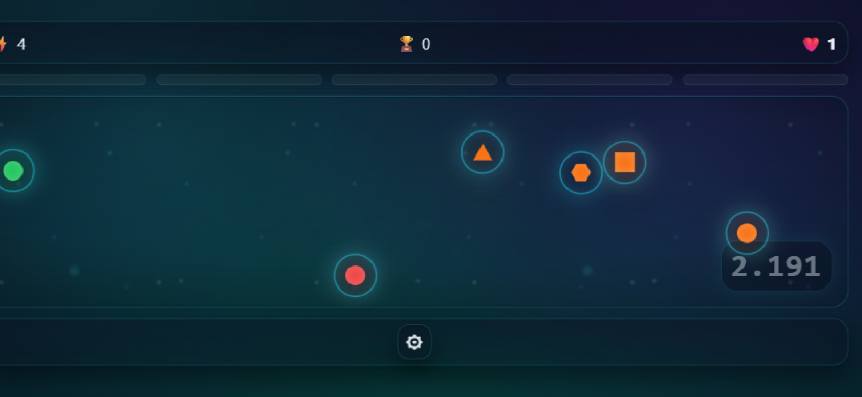
Whether it's a ball flying across a schoolyard or a speed tapping game on a smartphone, children still learn through movement, attention, practice, and play.
Final Thoughts
The conversation around screen time often focuses on quantity. But quality matters too.
Games that encourage attention, hand-eye coordination, reaction speed, and problem-solving can offer children opportunities to practice important developmental skills while having fun.
The playground may have moved to a screen, but the best games still teach children the same way they always have: through challenge, curiosity, and play.
Try Speed Tap
Challenge your reaction speed, focus and hand-eye coordination through a simple fast-paced tapping game.
Play Speed Tap